Mumbai – A rising chorus of concerns from residents has drawn attention to a growing public health and traffic issue: indiscriminate pigeon feeding in urban areas. The Maharashtra Government’s decision to shut down traditional kabutarkhanas is being welcomed by many citizens as a much-needed step to combat the health risks and urban congestion associated with pigeon populations.
🚨 The Hidden Dangers: Pigeon Poop & Lung Diseases
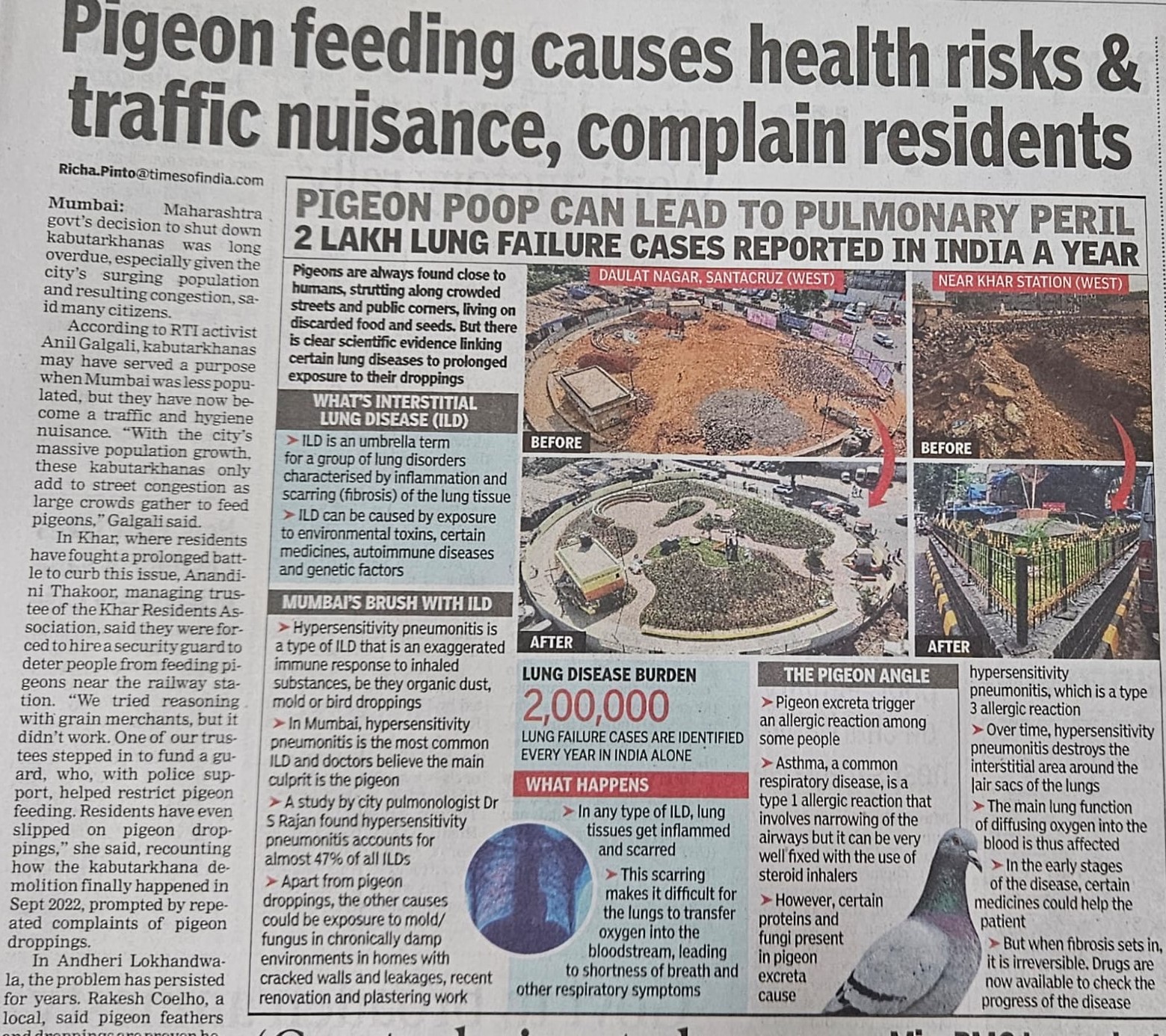
Doctors and health experts are raising red flags about the alarming link between pigeon droppings and Interstitial Lung Disease (ILD) – a serious medical condition that affects over 2 lakh Indians every year.
📌 What is ILD?
- ILD refers to a group of lung disorders causing inflammation and scarring (fibrosis) of lung tissues.
- It makes it difficult for lungs to transfer oxygen, leading to breathlessness and chronic fatigue.
- Pigeon droppings contain proteins and fungi that can trigger allergic reactions, and in many cases, lead to Hypersensitivity Pneumonitis (HP).
📍 Mumbai’s Struggle with Pigeons
In areas like Khar and Andheri Lokhandwala, residents have waged battles against this menace. Initiatives include:
- Installing iron fences to restrict access.
- Security guards preventing people from feeding pigeons.
- Conversion of kabutarkhanas into gardens and seating zones, reducing pigeon presence drastically.
🛠️ Before & After:
- Daulat Nagar, Santacruz (W) and Khar Station (W) have witnessed a visible transformation after removing pigeon feeding zones.
🧬 The Medical Perspective
- According to pulmonologists, 47% of all ILD cases in Mumbai are linked to hypersensitivity to pigeon droppings.
- Early-stage ILD can be managed with steroids, but once fibrosis sets in, the damage is often irreversible.
- Residents are also at risk from fungi in cracks and damp areas, worsened by pigeon droppings.
🚧 Pigeons & Urban Traffic
Besides health concerns, pigeon feeding also:
- Attracts crowds in congested spaces.
- Creates slippery footpaths due to droppings, causing accidents.
- Leads to public nuisance near railway stations and busy junctions.
✅ The Way Forward
The state’s move to dismantle kabutarkhanas is a positive step. However, a collaborative approach involving:
- Resident awareness
- Strict enforcement
- Urban redevelopment
is crucial to resolve this issue in a sustainable way.
📣 Final Word
While feeding birds is a well-intentioned cultural tradition, its unchecked urban practice is costing us our health, hygiene, and public spaces. Responsible citizen behavior and proactive governance can help Mumbai breathe a little easier.
Sources:
Times of India | July 2025
💬 Share your thoughts below.
Have you experienced issues related to pigeon feeding in your locality? Let us know in the comments!